Where most care starts
Exercise and physical therapy
- What it is
- A guided program of strengthening, mobility, and gradual return to activity.
- Used for
- Nearly every joint, tendon, and back problem on this site.
- Good to know
- This is the foundation of treatment, not just a step to get through. Tendons and joints get stronger when they are loaded gradually. Most programs take 6 to 12 weeks to show their full effect.
Diagnostic ultrasound
- What it is
- Imaging with sound waves, done in the exam room. It shows tendons, muscles, joints, nerves, and blood vessels, including while you move.
- Used for
- Tendon tears and wear, pinched nerves, fluid, and problems that only show up with movement.
- Good to know
- No radiation and no needles. It can't see inside bone or deep inside joints as well as MRI, so the two are often used for different questions.
Medicines
Anti-inflammatories (NSAIDs) and acetaminophen
- What it is
- Ibuprofen, naproxen, diclofenac gel, celecoxib, and acetaminophen (Tylenol).
- Used for
- Short-term relief of joint, tendon, and back pain; arthritis flares; inflammatory back pain.
- Good to know
- Use the lowest dose that works for the shortest time. NSAIDs can affect the stomach, kidneys, heart, and bleeding. Too much acetaminophen can damage the liver.
Nerve-pain medicines
- What it is
- Certain antidepressants (duloxetine, nortriptyline) and seizure medicines (gabapentin, pregabalin) that calm overactive nerves, plus lidocaine and capsaicin patches.
- Used for
- Sciatica, diabetic neuropathy, shingles pain, CRPS, fibromyalgia.
- Good to know
- Started low and raised slowly. It can take a few weeks to know if one works.
Muscle relaxants
- What it is
- Medicines like cyclobenzaprine, methocarbamol, and tizanidine for spasm; baclofen for spasticity.
- Used for
- A few days to weeks after a new back or neck strain.
- Good to know
- Most cause drowsiness. Less helpful for long-lasting pain. Carisoprodol can be habit-forming.
Injections
Diagnostic (numbing) injections
- What it is
- Numbing medicine placed at one suspected source of pain, such as a joint, a tendon sheath, a muscle, or a nerve.
- Used for
- Finding the true source of pain when several structures could be to blame. For example, numbing the scalene or pectoralis minor muscle in suspected thoracic outlet syndrome, or the hip joint versus nearby tendons.
- Good to know
- If the pain eases for a few hours, that spot is likely the source. The result guides the next treatment.
Trigger point injections and dry needling
- What it is
- A thin needle placed into a tight, tender knot in a muscle, with or without numbing medicine.
- Used for
- Myofascial pain in the neck, shoulders, back, and buttock; tension headaches.
- Good to know
- Works best followed by stretching and fixing what overloads the muscle. Ultrasound helps avoid nerves and the lung.
Botulinum toxin (Botox) injections
- What it is
- A purified protein that relaxes overactive muscles and may calm pain nerves.
- Used for
- Chronic migraine (FDA-approved), spasticity, cervical dystonia, and some stubborn muscle or nerve pain.
- Good to know
- Effects start in about 1 to 2 weeks and last about 3 months. Evidence for muscle pain is mixed.
Steroid (cortisone) injections
- What it is
- A strong anti-inflammatory medicine placed into a joint, bursa, or tendon sheath.
- Used for
- Flares of arthritis, bursitis, trigger finger, carpal tunnel, frozen shoulder.
- Good to know
- Relief often starts within days and can last weeks to months. They calm pain but don't repair tissue. Repeated shots into tendons can weaken them, so they're used with care.
Hydrodilatation
- What it is
- Filling a tight joint with fluid (usually with a small amount of steroid) to stretch its lining.
- Used for
- Frozen shoulder.
- Good to know
- Works best combined with stretching afterward.
Platelet-rich plasma (PRP)
- What it is
- A concentrate made from your own blood, injected to support healing.
- Used for
- Knee arthritis and some tendon problems, such as tennis elbow.
- Good to know
- Evidence is strongest for knee arthritis and some tendon conditions, and mixed for others. Results vary from person to person. It is usually not covered by insurance.
Bone marrow aspirate concentrate (BMAC)
- What it is
- Cells and growth factors drawn from your own bone marrow, concentrated, and injected.
- Used for
- Arthritis and some tendon problems, mostly in research or after other options.
- Good to know
- Studies are smaller and shorter than for PRP. Not covered by insurance.
Prolotherapy
- What it is
- Injections of a mild irritant, usually sugar water (dextrose), meant to prompt a healing response.
- Used for
- Some ligament, tendon, and arthritis pain, and tailbone pain.
- Good to know
- Usually a series of injections. Evidence is modest and mixed.
Tendon procedures
Shockwave therapy
- What it is
- Strong sound-wave pulses delivered through the skin to a sore tendon or tissue.
- Used for
- Plantar fasciitis, Achilles and hamstring tendon pain, calcific shoulder tendinitis.
- Good to know
- Usually three to five short sessions, about a week apart. No needles. Often not covered by insurance.
Barbotage and lavage for calcium deposits
- What it is
- Under ultrasound, a needle breaks up a calcium deposit in a tendon and rinses it out with salt water.
- Used for
- Calcific tendinitis of the shoulder that hasn't improved.
- Good to know
- Done with local numbing, often followed by a steroid injection into the bursa. Soreness for a few days is common.
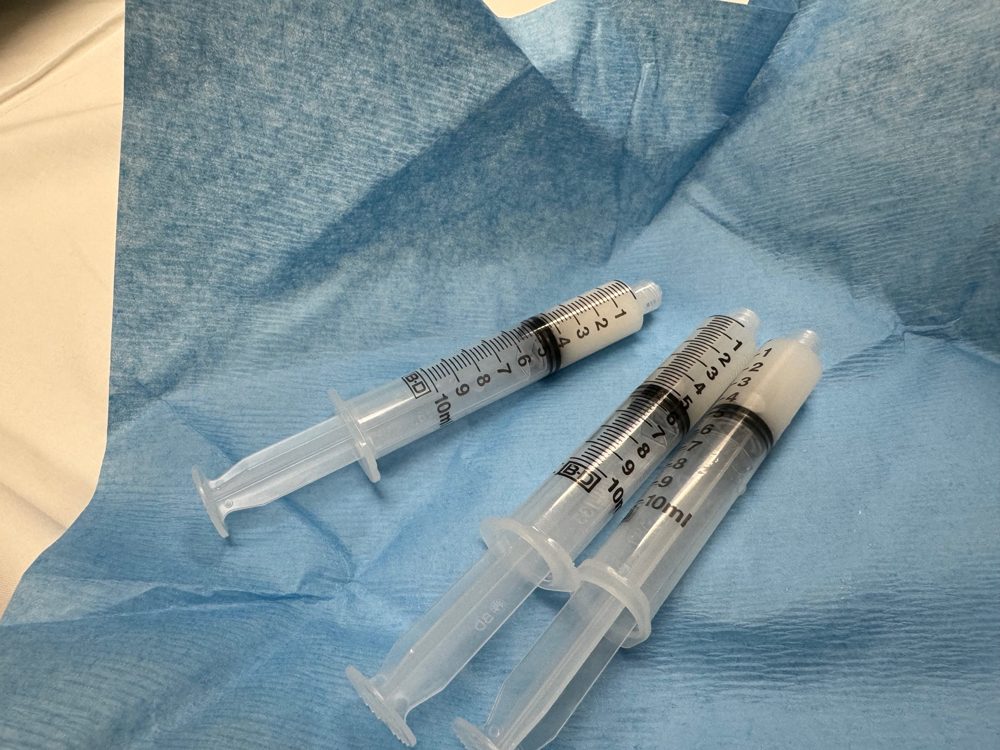
Tenotomy and tendon scraping
- What it is
- Using a needle or small device, guided by ultrasound, to break up and clear damaged tendon tissue.
- Used for
- Long-lasting tendon pain that hasn't improved with exercise.
- Good to know
- Done with local numbing. A period of protected activity and rehab follows.
Scar and fascial hydrodissection
- What it is
- Fluid placed under ultrasound to gently separate tissues that are stuck together by scar or tight fascia.
- Used for
- Painful scars after surgery or injury, and nerves or tendons tethered by scar tissue.
- Good to know
- Often combined with stretching or movement right after the procedure.
Nerve treatments
Nerve blocks
- What it is
- Numbing medicine placed next to a specific nerve.
- Used for
- Confirming which nerve carries the pain, and short-term relief, for example in occipital neuralgia.
- Good to know
- Relief often lasts much longer than the numbing medicine itself, sometimes days or weeks, because quieting the signal can help calm a sensitized nervous system and open a window for rehab. A good response is also often the step before longer-lasting nerve treatments.
Nerve hydrodissection
- What it is
- Using fluid, guided by ultrasound, to gently separate a pinched nerve from the tissue around it.
- Used for
- Carpal tunnel and other pinched nerves.
- Good to know
- A newer procedure with growing research, especially for carpal tunnel.
Radiofrequency nerve ablation
- What it is
- Heating the small sensory nerves that carry pain from a joint or tendon, so they stop sending pain signals for a while.
- Used for
- Arthritis of the knee, hip, shoulder, and spine joints. Some stubborn tendon pain.
- Good to know
- Relief often lasts 6 to 12 months or longer, and it can be repeated. Done after a test block confirms the right nerves. It treats pain, not the arthritis itself.
Stellate and sympathetic ganglion blocks
- What it is
- Numbing the nerve clusters that control blood flow and sweating in an arm or leg.
- Used for
- Complex regional pain syndrome, shingles pain, poor blood flow to a limb, and cancer pain from the belly or pelvic organs (celiac, hypogastric, and impar blocks).
- Good to know
- Often given as a series. Results vary.
Nerve stimulation
Peripheral nerve stimulation
- What it is
- A thin wire placed near a nerve sends mild electrical pulses that quiet pain signals.
- Used for
- Lasting pain from a single nerve or area, such as low back pain from the spine joints, shoulder, knee, or nerve pain in a leg (for example, sciatic nerve stimulation for CRPS).
- Good to know
- Some systems are temporary (about 60 days) and some are permanent. In a 2023 study of 60-day stimulation of the low back's medial branch nerves, many people still had relief a year later.
Spinal cord and DRG stimulation
- What it is
- Small leads placed near the spinal cord or nerve roots, powered by a small implanted battery.
- Used for
- Lasting nerve pain, including pain after back surgery, CRPS, and painful diabetic neuropathy.
- Good to know
- Always starts with a short trial of about a week, so you can see if it helps before deciding on a permanent device.
Intrathecal drug pump
- What it is
- A small implanted pump that delivers tiny doses of medicine to the fluid around the spinal cord.
- Used for
- Severe cancer pain, some long-lasting non-cancer pain, and severe spasticity (baclofen).
- Good to know
- Always starts with a trial. Refilled in the office every 1 to 3 months.
Spine procedures
Epidural and facet procedures
- What it is
- Injections near the spinal nerves (epidural) or into or around the small spine joints (facet).
- Used for
- Pinched nerves, spinal stenosis, facet arthritis.
- Good to know
- Epidurals can calm a flare of nerve pain while it heals. Facet nerve blocks can confirm the source before radiofrequency ablation.
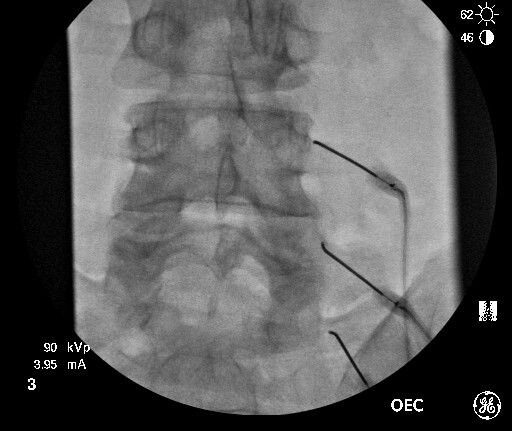
MILD (minimally invasive lumbar decompression)
- What it is
- Removing a small amount of thickened ligament through a tiny opening to make room for the nerves.
- Used for
- Spinal stenosis that limits standing and walking.
- Good to know
- An outpatient option for some people before or instead of larger surgery.
Basivertebral nerve ablation (Intracept)
- What it is
- Treating the nerve inside the vertebra that can carry pain from worn disc endplates.
- Used for
- Long-lasting low back pain with specific changes seen on MRI.
- Good to know
- Only for people whose MRI shows these particular changes.
Treatment articles in Learn
- Treating Long-Lasting Pain Without Pills: What Works, and What to Do When Tests Are Normal
- Why Use Ultrasound to Guide Injections?
- What Can a Musculoskeletal Ultrasound Show?
- PRP and Stem Cell Injections for Back and Neck Pain: What the Research Says
- Back and Pelvis Injections Explained: Facet, Medial Branch, SI Joint, and Epidural
- Anti-Inflammatories, Acetaminophen, and Muscle Relaxants: Using Them Safely
- Sympathetic Nerve Blocks: Stellate, Lumbar, Celiac, and More
- Spinal Cord Stimulation: A Test Drive Before You Decide
- Intrathecal Pain Pumps: Medicine Delivered Right to the Spine
- Tendon Pain Treatments: What the Research Says for Each Tendon
- Shoulder Injections: Which One, Where, and Why
- Hip Joint Nerve Treatment: Radiofrequency for Hip Arthritis and Lasting Hip Pain
- Acupuncture, Massage, Yoga, and Other Complementary Treatments: What Works?
- Nerve Blocks for the Head, Neck, Arms, Trunk, and Legs
- Stubborn Inner Elbow Pain? A Nerve Treatment for Golfer's Elbow
- Outer Hip Pain That Won't Go Away: A New Nerve Treatment
- Tailbone Pain: What Is Ultrasound-Guided Prolotherapy?
- PRP, Bone Marrow, and Fat Injections: What Research Says About Hip, Knee, and Ankle Pain
- Chronic Knee Pain: Nerve Treatments When Shots and Therapy Aren't Enough
- Peripheral Nerve Stimulation: A Small Device for Long-Lasting Pain
- Shoulder Arthritis and Tennis Elbow: Turning Down the Pain Nerves
- Nerve Hydrodissection: Using Fluid to Free a Pinched Nerve
General information only, not medical advice. Insurance coverage varies, especially for regenerative treatments and shockwave therapy. Last reviewed November 2026.
