Treatments
Tendon Pain Treatments: What the Research Says for Each Tendon
For general information only. This is not medical advice. See the full disclaimer at the end of this article.
A sore tendon that won't settle down, like tennis elbow, a cranky rotator cuff, jumper's knee, or Achilles pain, is one of the most common reasons people see me. Your options include exercise, steroid shots, platelet-rich plasma (PRP), prolotherapy, shockwave, and needle procedures. Which one is best depends a lot on which tendon is hurting. This guide summarizes what the research says.
At a glance
- Long-lasting tendon pain is usually tendinopathy: the tendon's structure has changed and it's having trouble healing. It's usually not ongoing inflammation.
- Progressive loading exercise is the foundation for every tendon.
- Steroid shots help pain quickly, but the relief usually lasts only weeks and may slow healing in some tendons.
- PRP, prolotherapy, and shockwave tend to work more slowly but last longer. Results differ by tendon.
Tendinitis, tendinosis, tendinopathy
- Tendinitis ("-itis" means inflammation): a new, irritated tendon, usually after a sudden increase in activity.
- Tendinosis ("-osis" means wear): the tendon's fibers are disorganized and it has extra blood vessels and nerves growing in. This is the usual problem in pain lasting more than about 3 months.
- Tendinopathy: the umbrella term for painful tendons, used by most doctors today.
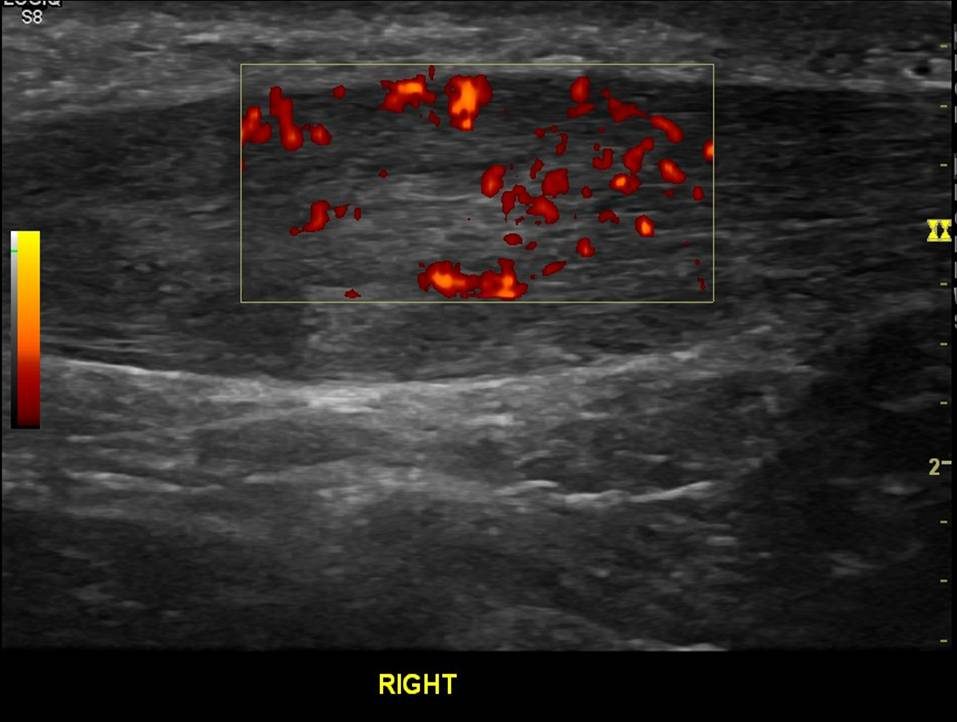
Related problems include tenosynovitis (irritation of the tendon's sheath), calcific tendinitis (calcium deposits), and enthesopathy (trouble where the tendon attaches to bone). See How Tendons and Joints Get Hurt and Heal.
The foundation: load the tendon
Tendons get stronger when they're loaded gradually. A physical therapy program of slow, heavy strengthening, often eccentric (lowering) or isometric (holding) exercises, works for nearly every tendon. It usually takes 6 to 12 weeks to show full benefit. Other treatments are best used to calm pain enough to do this work, or when exercise alone has stalled.
The evidence, tendon by tendon
| Tendon problem | Best supported options | What to know |
|---|---|---|
| Rotator cuff tendinopathy (shoulder) | Exercise; prolotherapy and PRP for longer relief | Steroid relief lasted about 3 to 6 weeks; PRP and prolotherapy lasted more than 24 weeks in a large review. Prolotherapy had a larger effect than PRP. PRP's overall benefit is small. |
| Tennis elbow (lateral epicondylosis) | Shockwave, exercise, PRP | Shockwave beat steroid and other injections for pain and grip strength, especially when pain has lasted more than 6 months, with effects up to about 2 years. Steroid shots help short-term but more people relapse. |
| Jumper's knee (patellar tendinopathy) | Exercise first; multiple PRP injections for lasting pain | Exercise worked best in the first 6 months. Over the long term, multiple PRP injections did better than shockwave or exercise alone. Shockwave evidence here is weak. |
| Achilles tendinopathy | Exercise (heel drops); needle procedures for stubborn cases | PRP did not beat placebo in reviews. Shockwave evidence is weak for the Achilles. |
| Plantar fasciitis (heel) | Stretching, footwear; shockwave | High-quality evidence supports shockwave. PRP may last longer than steroid. |
| High hamstring tendinopathy | Progressive loading; shockwave or PRP | See Buttock Pain. |
| Calcific tendinitis (shoulder) | Barbotage (needle rinsing), shockwave | Breaks up and removes the calcium deposit. |
More about each treatment
Steroid injections
Fast relief, often within days. But the benefit often fades in weeks, and in tennis elbow, people who got steroid shots were more likely to have pain come back at one year. Repeated steroid shots into a tendon can weaken it. They're best for short-term relief, or for a bursa or tendon sheath next to the tendon rather than the tendon itself.
Platelet-rich plasma (PRP)
Made from your own blood. Large reviews of placebo-controlled trials show a small to moderate benefit overall, with the best results for tennis elbow, rotator cuff, and patellar tendons, and little effect for the Achilles. Leukocyte-rich and leukocyte-poor PRP both seem to work. Usually not covered by insurance.
Prolotherapy
Sugar-water (dextrose) injections that prompt a healing response. For the rotator cuff, it performed as well as or better than PRP in one large review, at a lower cost.
Shockwave therapy
Strong sound-wave pulses through the skin, usually 3 to 5 sessions. Focused shockwave reaches deeper; radial shockwave spreads near the surface and may suit superficial tendons. Works best for plantar fasciitis and tennis elbow.
Needle tenotomy and tendon scraping
Ultrasound-guided procedures that break up and remove damaged tendon tissue. An option when other treatments haven't worked, before considering surgery.
A practical plan
- Confirm the diagnosis with an exam, and ultrasound when helpful (see What Ultrasound Can Show).
- Adjust your load: not complete rest, but less of what flares it.
- Start a progressive strengthening program.
- If pain blocks progress after 6 to 12 weeks, add the treatment with the best evidence for your tendon.
- Keep strengthening after any injection or shockwave. That's what makes the result last.
Common questions
Is a steroid shot or PRP better for tendon pain?
Steroid shots usually work faster, but the relief often lasts only weeks. PRP works more slowly and tends to last longer for the rotator cuff, tennis elbow, and patellar tendon. PRP has not been shown to help Achilles tendinopathy.
Does shockwave therapy work for tendons?
The best evidence for shockwave is for plantar fasciitis and tennis elbow, where it can work better than injections. Evidence is weaker for the Achilles and patellar tendons.
How long does tendinopathy take to heal?
A progressive strengthening program usually takes 6 to 12 weeks to show full benefit, and stubborn tendon problems can take several months. Keep strengthening after any injection or shockwave to make the result last.
What is the difference between tendinitis and tendinosis?
Tendinitis is a newly irritated, inflamed tendon. Tendinosis is a longer-lasting problem where the tendon's fibers are disorganized and it has trouble healing. Most tendon pain that lasts more than three months is tendinosis.
Sources
- Lin MT, Chiang CF, Wu CH, et al. Comparative effectiveness of injection therapies in rotator cuff tendinopathy: a systematic review, pairwise and network meta-analysis of randomized controlled trials. Arch Phys Med Rehabil. 2019;100(2):336-349.
- Hamid MSA, Sazlina SG. Platelet-rich plasma for rotator cuff tendinopathy: a systematic review and meta-analysis. PLoS One. 2021;16(5):e0251111.
- Liu WC, Chen CT, Lu CC, et al. Extracorporeal shock wave therapy shows superiority over injections for pain relief and grip strength recovery in lateral epicondylitis: a systematic review and network meta-analysis. Arthroscopy. 2022;38(6):2018-2034.
- Andriolo L, Altamura SA, Reale D, et al. Nonsurgical treatments of patellar tendinopathy: multiple injections of platelet-rich plasma are a suitable option. Am J Sports Med. 2019;47(4):1001-1018.
- Zhang YJ, Xu SZ, Gu PC, et al. Is platelet-rich plasma injection effective for chronic Achilles tendinopathy? A meta-analysis. Clin Orthop Relat Res. 2018;476(8):1633-1641.
- Charles R, Fang L, Zhu R, Wang J. The effectiveness of shockwave therapy on patellar tendinopathy, Achilles tendinopathy, and plantar fasciitis: a systematic review and meta-analysis. Front Immunol. 2023;14:1193835.
- Masiello F, Pati I, Veropalumbo E, et al. Ultrasound-guided injection of platelet-rich plasma for tendinopathies: a systematic review and meta-analysis. Blood Transfus. 2023;21(2):119-136.
- Chen PC, Wu KT, Chou WY, et al. Comparative effectiveness of different nonsurgical treatments for patellar tendinopathy: a systematic review and network meta-analysis. Arthroscopy. 2019;35(11):3117-3131.
- Coombes BK, Bisset L, Vicenzino B. Efficacy and safety of corticosteroid injections and other injections for management of tendinopathy: a systematic review of randomised controlled trials. Lancet. 2010;376(9754):1751-1767.
Based on Dr. Chen's lecture: Lectures: Tendinopathy: Pathophysiology, Conditions and Treatments; Common Musculoskeletal Conditions in Chronic Pain.
This article is for general information and education only and does not constitute medical advice. It is not a substitute for an evaluation, diagnosis, or treatment by a qualified healthcare provider. Reading this article does not create a doctor–patient relationship. Every person is different; talk with your own doctor before making decisions about your care. If you think you have a medical emergency, call 911.
