Shoulder
Shoulder Injections: Which One, Where, and Why
For general information only. This is not medical advice. See the full disclaimer at the end of this article.
"A shoulder shot" can mean many different things. Your shoulder has a ball-and-socket joint, a small joint at the top (the AC joint), a cushion called a bursa, the biceps tendon, and several nerves. Each can cause pain, and each has its own injection. Getting the medicine to the right spot makes a big difference, which is why I use ultrasound guidance.
At a glance
- The right injection depends on the source of your pain, so a careful exam (and often an ultrasound) comes first.
- Ultrasound guidance makes shoulder injections more accurate, and for some, more effective.
- For frozen shoulder, joint injections and hydrodilatation help most when combined with stretching.
- For long-lasting arthritis pain, nerve blocks and nerve ablation can help when surgery isn't the right choice.
Why guidance matters
In a review comparing ultrasound-guided and "blind" shoulder injections, ultrasound was more accurate for every spot tested:
| Injection site | Accuracy with ultrasound | Accuracy without guidance |
|---|---|---|
| AC joint | about 94% | about 68% |
| Biceps tendon sheath | about 87% | about 27% |
| Glenohumeral (ball-and-socket) joint | about 93% | about 73% |
| Subacromial bursa | about 65% | about 70% |
Ultrasound-guided injections also gave more pain relief for the subacromial bursa and biceps tendon. See Ultrasound-Guided Injections.
The main shoulder injections
| Injection | Used for | What to know |
|---|---|---|
| Subacromial bursa | Rotator cuff tendinopathy, bursitis, impingement | The most common shoulder injection. Steroid is used with caution in large rotator cuff tears. For lasting tendon pain, PRP or prolotherapy may last longer (see Tendon Pain Treatments). |
| Glenohumeral joint (ball and socket) | Shoulder arthritis, frozen shoulder, labral (SLAP) tears | Usually given from the back of the shoulder. |
| Hydrodilatation | Frozen shoulder (adhesive capsulitis) | A larger volume of fluid stretches the tight joint lining. Results were similar to a steroid joint injection early on, and better at 4 to 16 weeks. |
| AC joint | AC joint arthritis or sprain (separated shoulder) | Pain right on top of the shoulder, worse reaching across your body or lifting overhead. |
| Biceps tendon sheath | Biceps tendinitis at the front of the shoulder | Ultrasound helps avoid the small artery next to the tendon. |
| Suprascapular nerve block | Shoulder arthritis, frozen shoulder, rotator cuff pain, pain after surgery | This nerve carries much of the shoulder joint's feeling. Blocks gave pain relief compared with placebo and physical therapy. |
| Shoulder nerve radiofrequency ablation | Long-lasting arthritis or rotator cuff pain when surgery isn't an option | Turns off the joint's sensory nerve branches after a positive test block. |
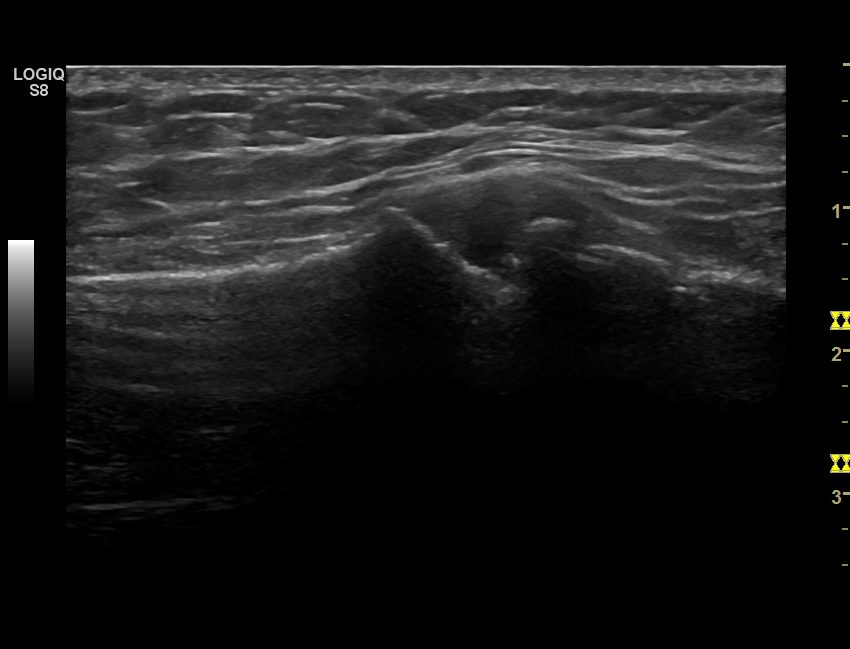
AC joint arthritis
The acromioclavicular (AC) joint is where your collarbone meets the top of your shoulder blade. It can wear out with age or heavy lifting, or be injured in a fall onto the shoulder. You'll feel pain right on top of the shoulder when you press on it, reach across your body, or lift weights overhead. Weightlifters and manual workers in their 20s and 30s also get it. Treatment includes activity changes, strengthening, an ultrasound-guided injection, and, if needed, surgery to trim the end of the collarbone.
SLAP tears
A SLAP tear is a tear of the labrum (the rim of cartilage around the socket) where the biceps tendon attaches. It often comes from overhead sports, heavy lifting, a fall on an outstretched hand, or a dislocation. You may feel deep pain, clicking, or weakness with overhead activity. An MRI with dye (MR arthrogram) shows it best. Many people improve with therapy focused on shoulder blade control, rotator cuff strength, and stretching the back of the shoulder. A joint injection can help with pain during rehab.
Nerve treatments for shoulder pain
Three main nerves carry pain from the shoulder joint: the suprascapular nerve, the axillary nerve, and the lateral pectoral nerve. Under ultrasound, small branches of each can be numbed to test whether they carry your pain. If a test block works, those branches can be treated with radiofrequency ablation for longer relief, often 6 months or more.
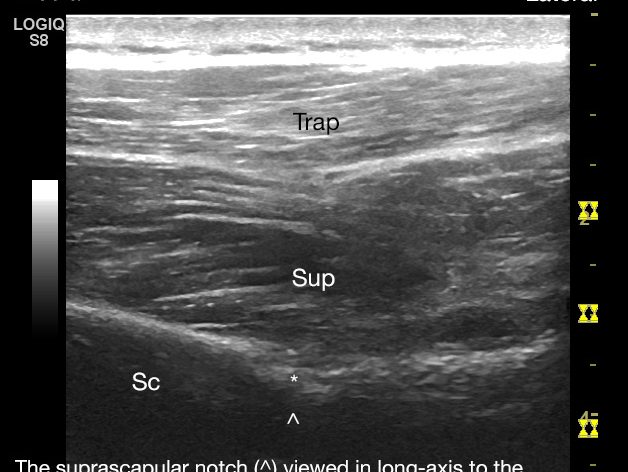
See also Shoulder Arthritis and Tennis Elbow: Nerve Ablation.
Other shoulder-area injections
- Subcoracoid and subscapular bursa injections for less common bursitis
- Sternoclavicular joint injection, where the collarbone meets the breastbone
- Trigger point injections for shoulder-girdle muscle pain
- Barbotage for calcium deposits in the rotator cuff
See Shoulder Injuries in Sports and the shoulder conditions list.
Common questions
Which shoulder injection do I need?
It depends on what is causing the pain. Bursitis and rotator cuff tendinopathy are treated in the subacromial bursa, arthritis and frozen shoulder in the ball-and-socket joint, and pain on top of the shoulder in the AC joint. An exam and often an ultrasound come first.
Is an ultrasound-guided shoulder injection better?
Yes, for most shoulder injections. Ultrasound guidance was more accurate for the AC joint, biceps tendon sheath, and ball-and-socket joint, and gave more pain relief for the bursa and biceps tendon.
What helps frozen shoulder the most?
A joint injection or hydrodilatation combined with a home stretching program. Hydrodilatation gave better results than a steroid joint injection alone at 4 to 16 weeks in a large review.
Can shoulder arthritis be treated without surgery?
Yes. Options include exercise, joint injections, a suprascapular nerve block, and radiofrequency ablation of the shoulder joint's sensory nerves for longer-lasting relief.
Sources
- Aly AR, Rajasekaran S, Ashworth N. Ultrasound-guided shoulder girdle injections are more accurate and more effective than landmark-guided injections: a systematic review and meta-analysis. Br J Sports Med. 2015;49(16):1042-1049.
- Soh E, Li W, Ong KO, et al. Image-guided versus blind corticosteroid injections in adults with shoulder pain: a systematic review. BMC Musculoskelet Disord. 2011;12:137.
- Lin MT, Hsiao MY, Tu YK, Wang TG. Comparative efficacy of intra-articular steroid injection and distension in patients with frozen shoulder: a systematic review and network meta-analysis. Arch Phys Med Rehabil. 2018;99(7):1383-1394.
- Chang KV, Hung CY, Wu WT, et al. Comparison of the effectiveness of suprascapular nerve block with physical therapy, placebo, and intra-articular injection in management of chronic shoulder pain: a meta-analysis of randomized controlled trials. Arch Phys Med Rehabil. 2016;97(8):1366-1380.
- Tran J, Peng PWH, Agur AMR. Anatomical study of the innervation of glenohumeral and acromioclavicular joint capsules: implications for image-guided intervention. Reg Anesth Pain Med. 2019;44(4):452-458.
- Keener JD, Brophy RH. Superior labral tears of the shoulder: pathogenesis, evaluation, and treatment. J Am Acad Orthop Surg. 2009;17(10):627-637.
Based on Dr. Chen's lecture: Lectures: Interventional Treatments in the Shoulder Region (2023); Ultrasound-Guided Procedures: Principles, Joints, Tendons, Bursa; Common Musculoskeletal Conditions in Chronic Pain.
This article is for general information and education only and does not constitute medical advice. It is not a substitute for an evaluation, diagnosis, or treatment by a qualified healthcare provider. Reading this article does not create a doctor–patient relationship. Every person is different; talk with your own doctor before making decisions about your care. If you think you have a medical emergency, call 911.
