Ankle & foot
Burning, Tingling, or Numb Foot? Nerve Causes of Foot and Ankle Pain
For general information only. This is not medical advice. See the full disclaimer at the end of this article.
Not all foot pain comes from bones, joints, or tendons. Several nerves run from the knee down into the foot, and each can get pinched or irritated. Nerve pain usually feels burning, tingling, electric, or numb. Here are the most common causes.
At a glance
- Burning or tingling in the sole may be tarsal tunnel syndrome.
- Pain between the toes, especially in tight shoes, is often Morton's neuroma.
- Some stubborn heel pain comes from a small nerve (Baxter's nerve), not just plantar fasciitis.
- Foot drop or numbness on the top of the foot may start at the outside of the knee.
- Numbness in both feet points to a whole-body nerve problem, such as diabetic neuropathy.
Tarsal tunnel syndrome
The tibial nerve passes behind the inner ankle bone through a tight space called the tarsal tunnel. A cyst, swollen tendons, swollen veins, an old injury, or flat feet can squeeze it. Symptoms include burning, tingling, or numbness in the sole and toes, often worse with standing or walking.
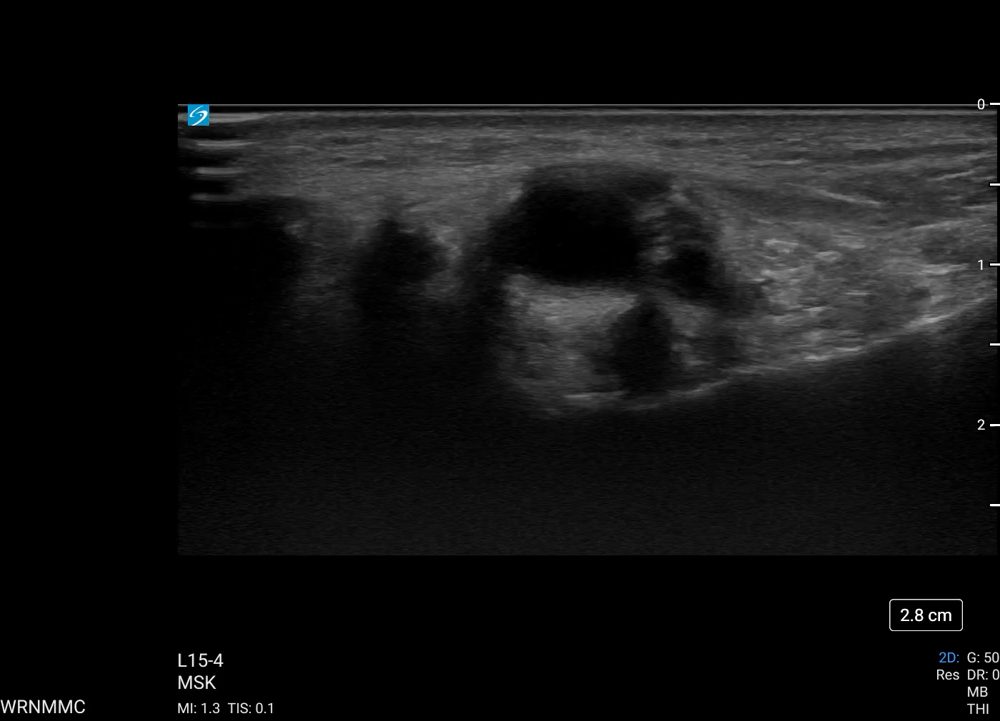
Morton's neuroma
A nerve between the toes, most often between the third and fourth toes, becomes thickened and irritated. It feels like walking on a pebble, with burning or numbness into the toes. High heels and narrow shoes make it worse. Ultrasound is about as accurate as MRI for finding it.
Treatment: Wider shoes with a low heel, a metatarsal pad, and injections. Surgery for cases that don't improve.
Heel pain from Baxter's nerve
A small nerve called Baxter's nerve (the first branch of the lateral plantar nerve) runs under the heel and supplies the plantar fascia and heel bone. When it's pinched, it causes heel pain that can mimic or occur with plantar fasciitis. If heel pain doesn't improve with standard treatment, this nerve may be involved. Hydrodissection, injections, and nerve treatments are options.
The peroneal nerve at the knee
The common peroneal nerve (also called the common fibular nerve) wraps around the outside of the knee just below the skin, near the top of the fibula bone. Crossing your legs, long squatting, a tight cast or brace, fast weight loss, a cyst, or a knee injury can squeeze it.
Symptoms: numbness on the top of the foot and outer shin, and weakness lifting the foot. That weakness is called foot drop, and it can cause tripping.
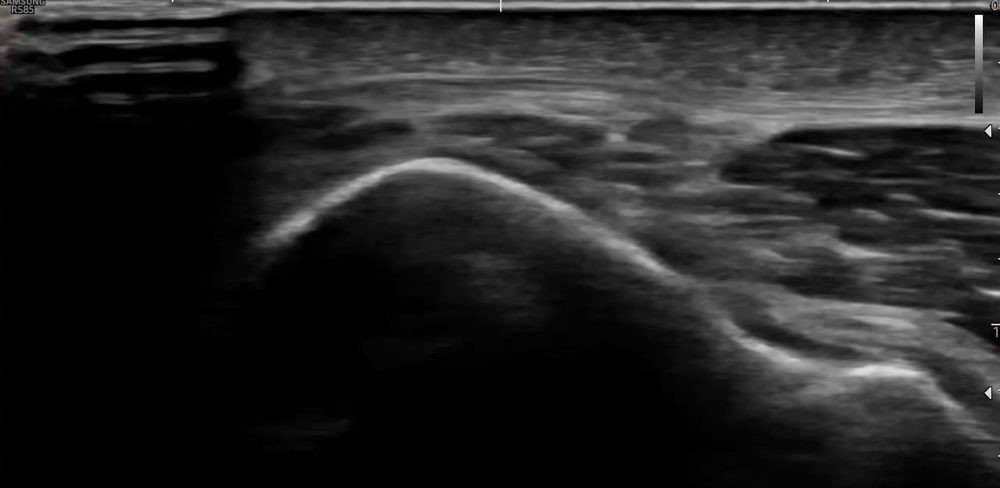
Other nerves in the lower leg and foot
- Superficial peroneal nerve: numbness or burning on the top of the foot. It can be pinched where it passes through the tissue of the shin, often after ankle sprains or from tight boots.
- Deep peroneal nerve (anterior tarsal tunnel): pain on the top of the foot or in the first web space, often from tight laces, high heels, or bone spurs.
- Sural nerve: burning along the outer ankle and foot. It can be irritated by ankle sprains, tight boots, Achilles problems, or vein procedures.
- Saphenous nerve: pain on the inner knee or inner ankle, sometimes after knee surgery.
Both feet numb or burning? Think whole-body causes
When both feet are affected, starting at the toes, the cause is often peripheral neuropathy, most commonly from diabetes. Nerves in diabetic neuropathy are often larger on ultrasound. See the peripheral neuropathy section.
Treatment options
- Footwear changes and padding
- Treating the cause, such as a cyst, flat feet, or tight boots
- Ultrasound-guided nerve hydrodissection or injections
- Surgery to release the nerve for cases that don't improve
Get checked promptly for foot drop, weakness that's getting worse, or a foot sore that won't heal.
Sources
- Trescot AM, ed. Peripheral Nerve Entrapments: Clinical Diagnosis and Management. Springer; 2016.
- Bignotti B, et al. Ultrasound versus magnetic resonance imaging for Morton neuroma: systematic review and meta-analysis. Eur Radiol. 2015;25(8):2254-2262.
- Presley JC, et al. Sonographic visualization of the first branch of the lateral plantar nerve (Baxter nerve). J Ultrasound Med. 2013;32(9):1643-1652.
- Visser LH, et al. Diagnostic value of high-resolution sonography in common fibular neuropathy at the fibular head. Muscle Nerve. 2013;48(2):171-178.
- Rondhuis JJ, Huson A. The first branch of the lateral plantar nerve and heel pain. Acta Morphol Neerl Scand. 1986;24:269-280.
Based on Dr. Chen's lecture: Lecture: Ultrasound of Foot and Ankle Nerves: Anatomy, Variations and Pathologies.
This article is for general information and education only and does not constitute medical advice. It is not a substitute for an evaluation, diagnosis, or treatment by a qualified healthcare provider. Reading this article does not create a doctor–patient relationship. Every person is different; talk with your own doctor before making decisions about your care. If you think you have a medical emergency, call 911.
